
AI Is Everywhere, Even in Your Shopping Cart
How AI is being used to deceive customers and falsely advertise products.
Ah, yes, Christmas time. The cold, cozy season of the year, where you sit inside your warm home, drinking something hot, while wrapped up on your couch, browsing through the vast shopping sites to get something for your loved ones. Perhaps you were thinking of getting a cool sweater for a friend or funny Christmas ornaments to trigger your mother (certainly not speaking from experience).
With the establishment of AI services such as ChatGPT, Sora, and others, capitalism has reached a new, unhinged stage of misleading customers into buying products that either don't exist or are open to interpretation as to whether they're actually a scam or not; today, all in the name of good Christmas spirit, of course.
Thus, in this blog, I'd like to go over some examples of AI being used to deceive customers or straight-up advertise fake products that don’t exist, and also share some tips on what to look out for in this regard when shopping online.
RagnAIrök
One of my best decisions of this year was ditching most social media platforms, except for art-centered ones like Cara, and others I rarely used anyways, such as LinkedIn, Discord, and YouTube.
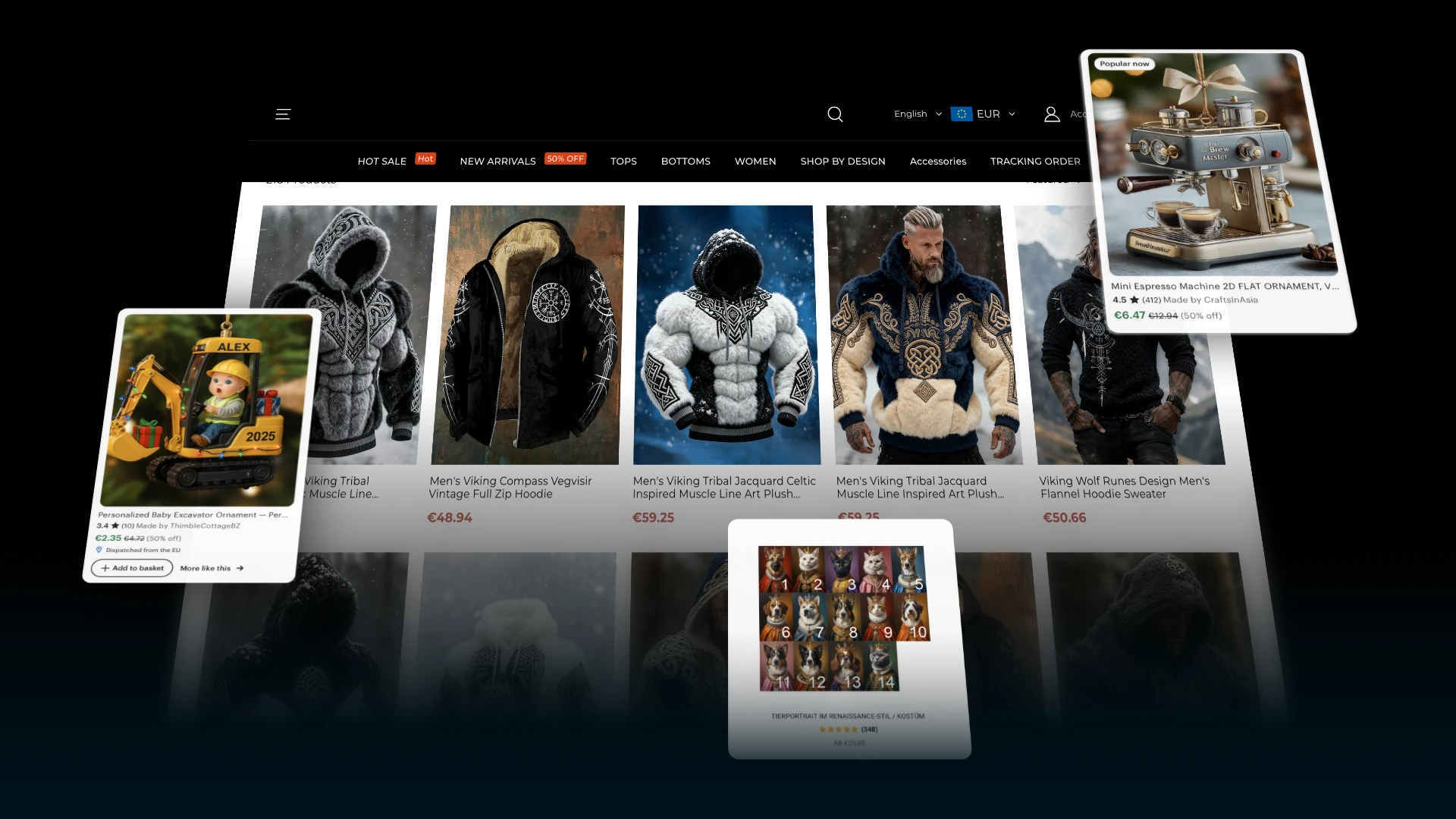
A trend I've been noticing, especially on Instagram, before deleting it for good, was the excessive amount of advertisements using AI-generated images, in addition to the usual AI-slop, especially in clothing. One example you might have seen yourself is these Viking-themed sweaters offered by various shops, showing intricate, crocheted patterns of dragons or hoodies that look like they were tailored for a silverback gorilla.
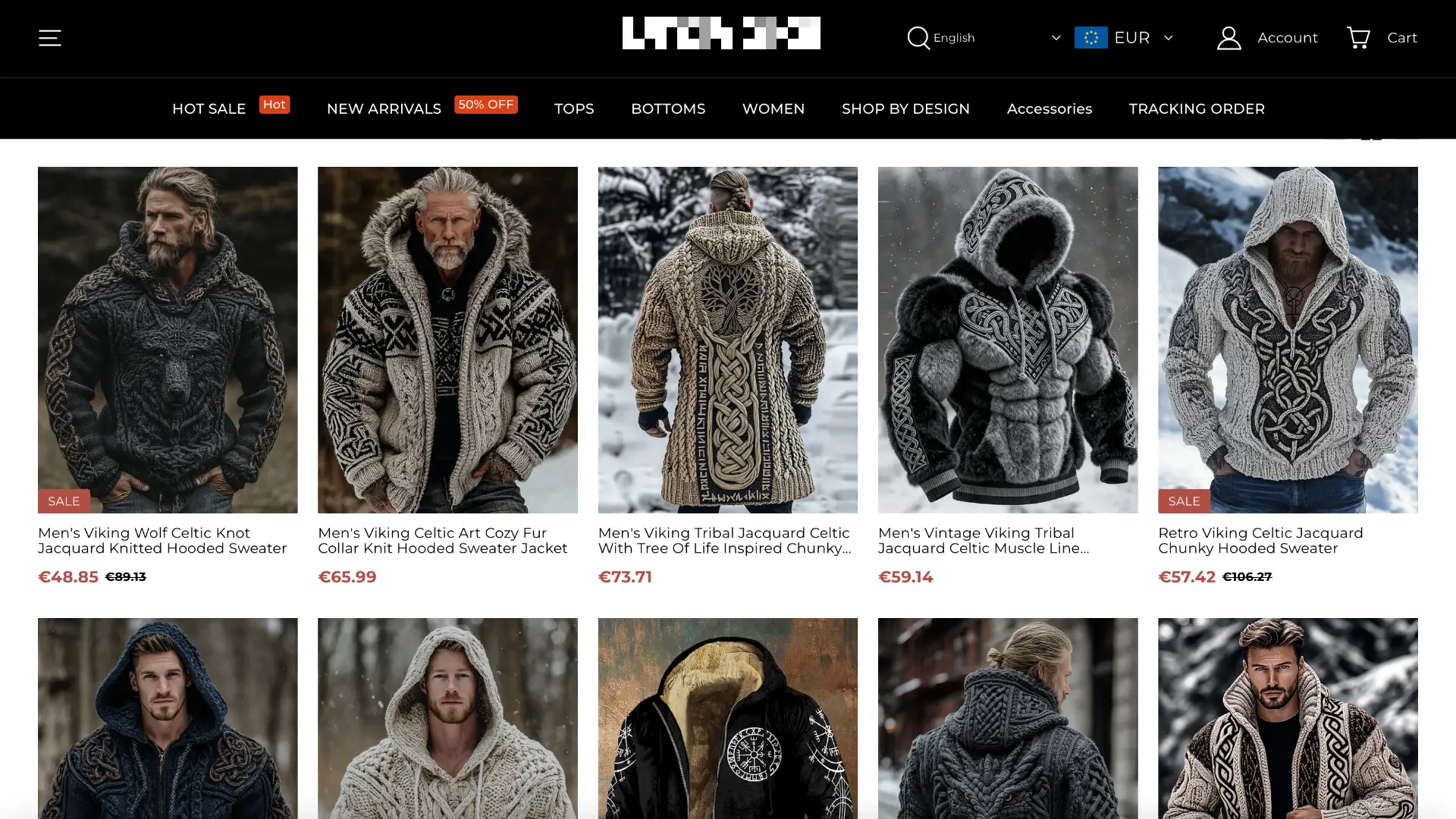
Unsurprisingly to some, yet sadly not to everyone (judging by reviews of these shops found online), all of the images shown on these stores selling this type of clothes are AI-generated. The clothing doesn't exist, and the actual product received (if you're lucky) is usually the cheapest possible sweater or hoodie with a print on it, sometimes not even close to resembling the "vision" shown in the AI images.
But how can you spot these images as clearly AI-generated?
Apart from the images usually feeling "off" and looking uncanny, there are a few hints to detect whether an image was most likely generated or not. I'm saying "most likely," as with these systems becoming more refined and advanced, it simply gets harder to tell if an image was created using AI.
Lack of Views
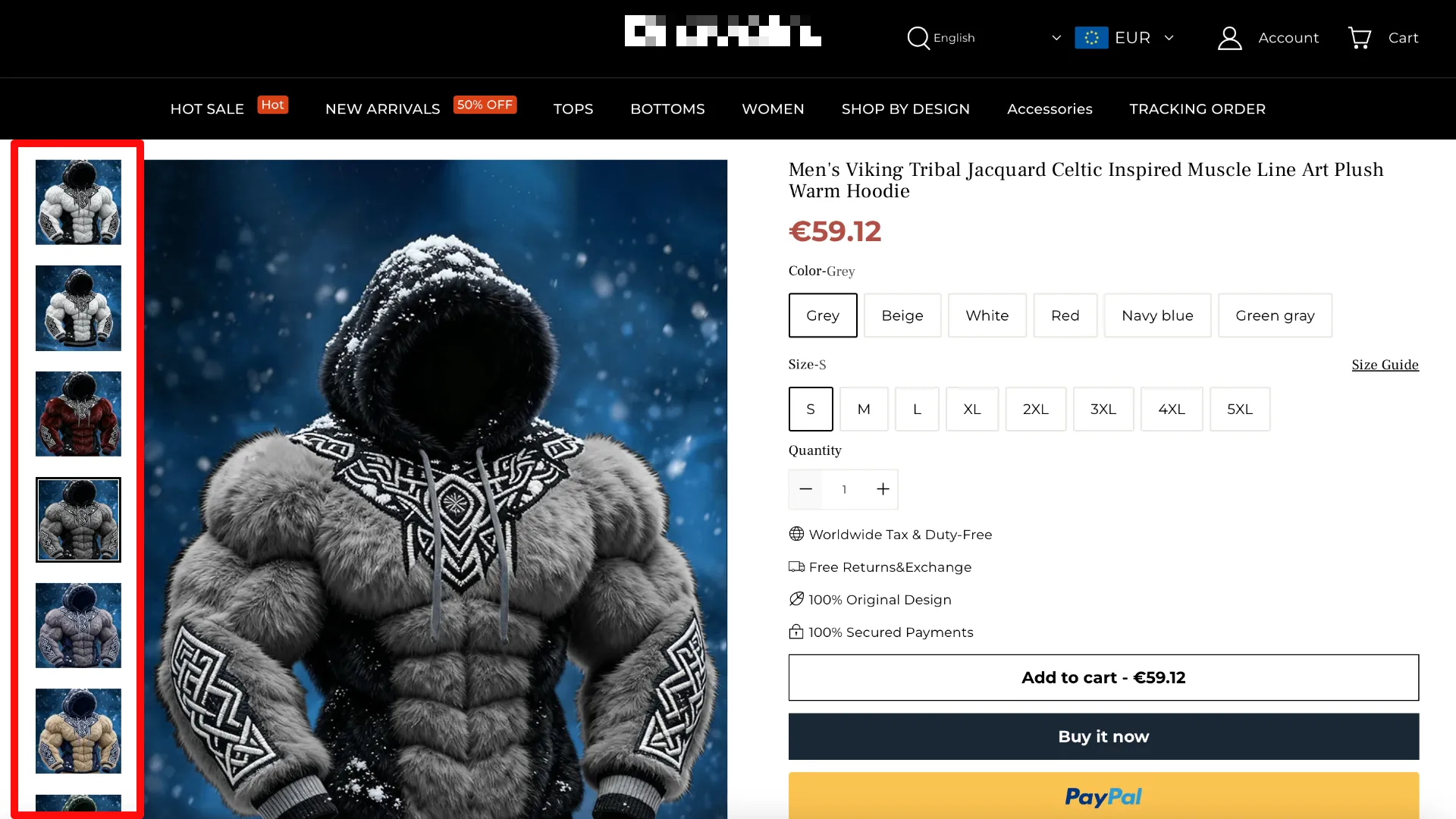
The usual first telltale sign of these images being generated is the fact that there are never more views of the products than one perspective. There are no images showing a different view of the clothes or even close-up detail shots of the crocheted patterns. Other than colour variations, they only ever show one view, as for example, only the front or the back side.
This is because these algorithms are (for now, at least) fairly bad at maintaining consistency, especially with detailed patterns. Since these clothes would look different from every perspective, it would make it even more obvious that the product shown on these images doesn't actually exist.
Details
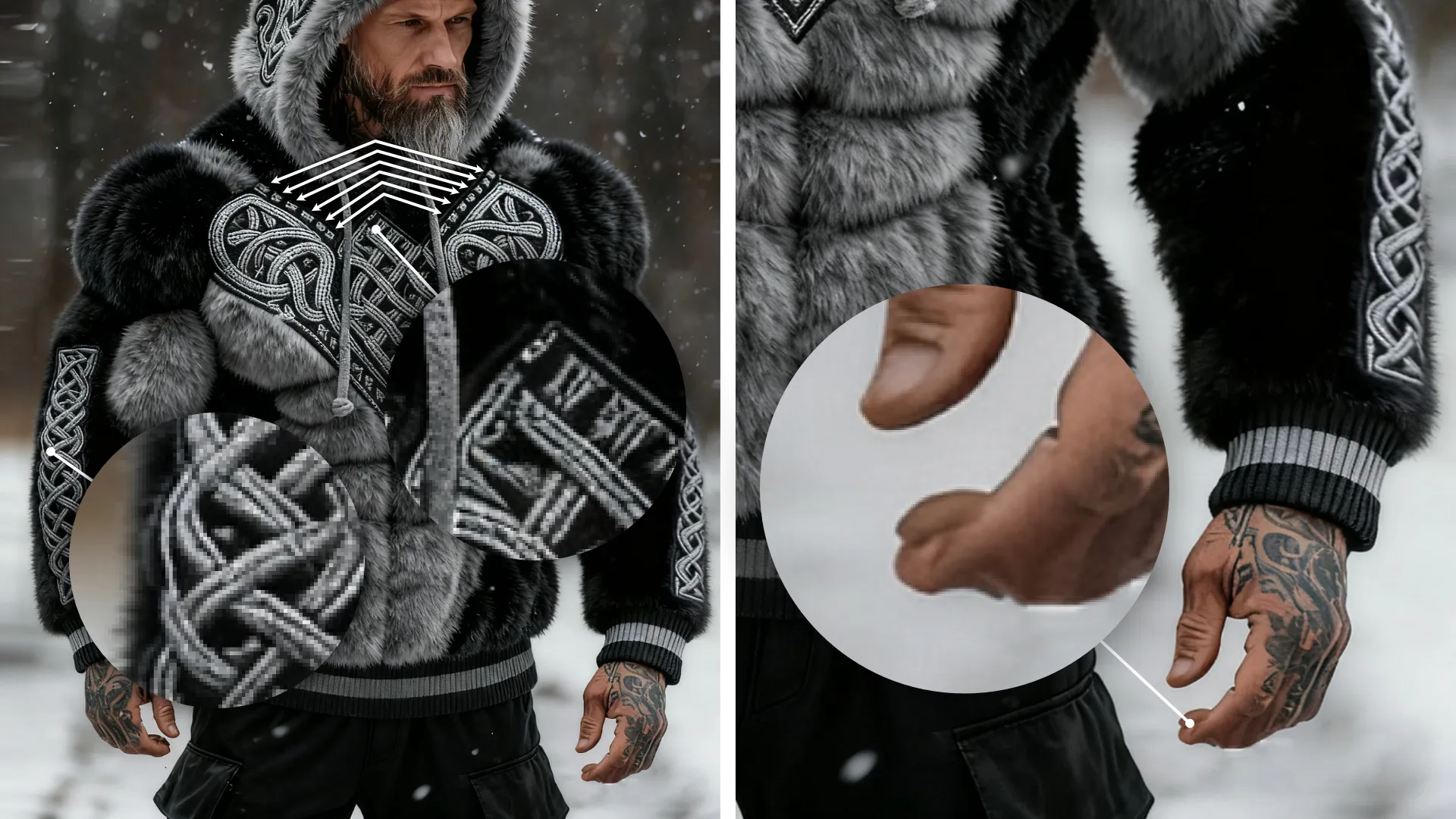
Another telltale sign is the details. It’s usually best practice, especially with patterns, to pick a spot and follow it, such as the crocheted patterns on this sweater. Usually, they eventually end in a mash of pixels, merging and blending together. AI-generated images tend to often have a very "smudged look" in their details.
I'm not a fashion designer, but I’d also expect the pattern on the chest to be mirrored, yet you can easily pick out that there's no consistency when comparing both sides.
Also, in the case of this alleged model wearing these clothes, you can see that the fingers are merging together and not making any sense.
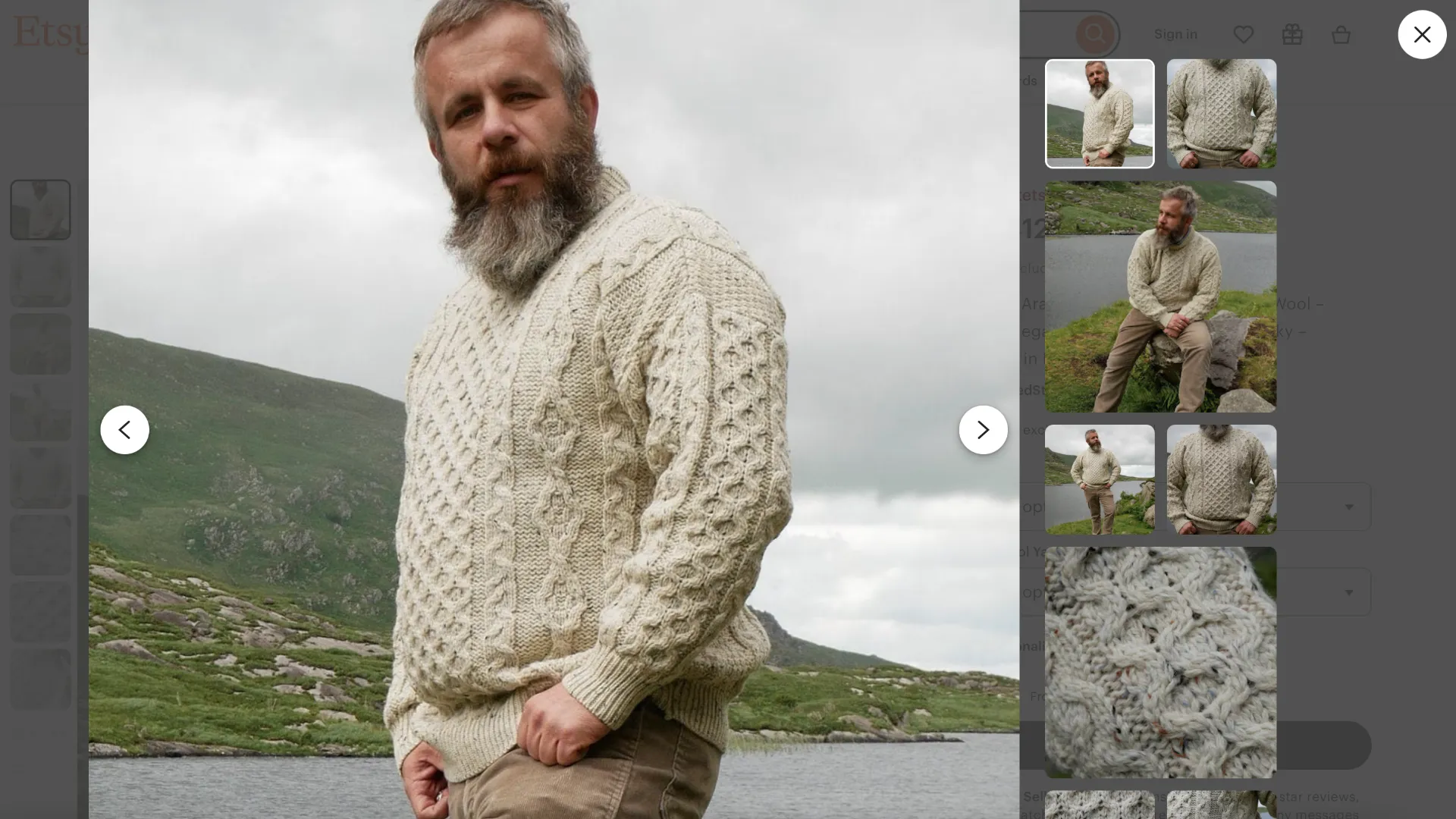
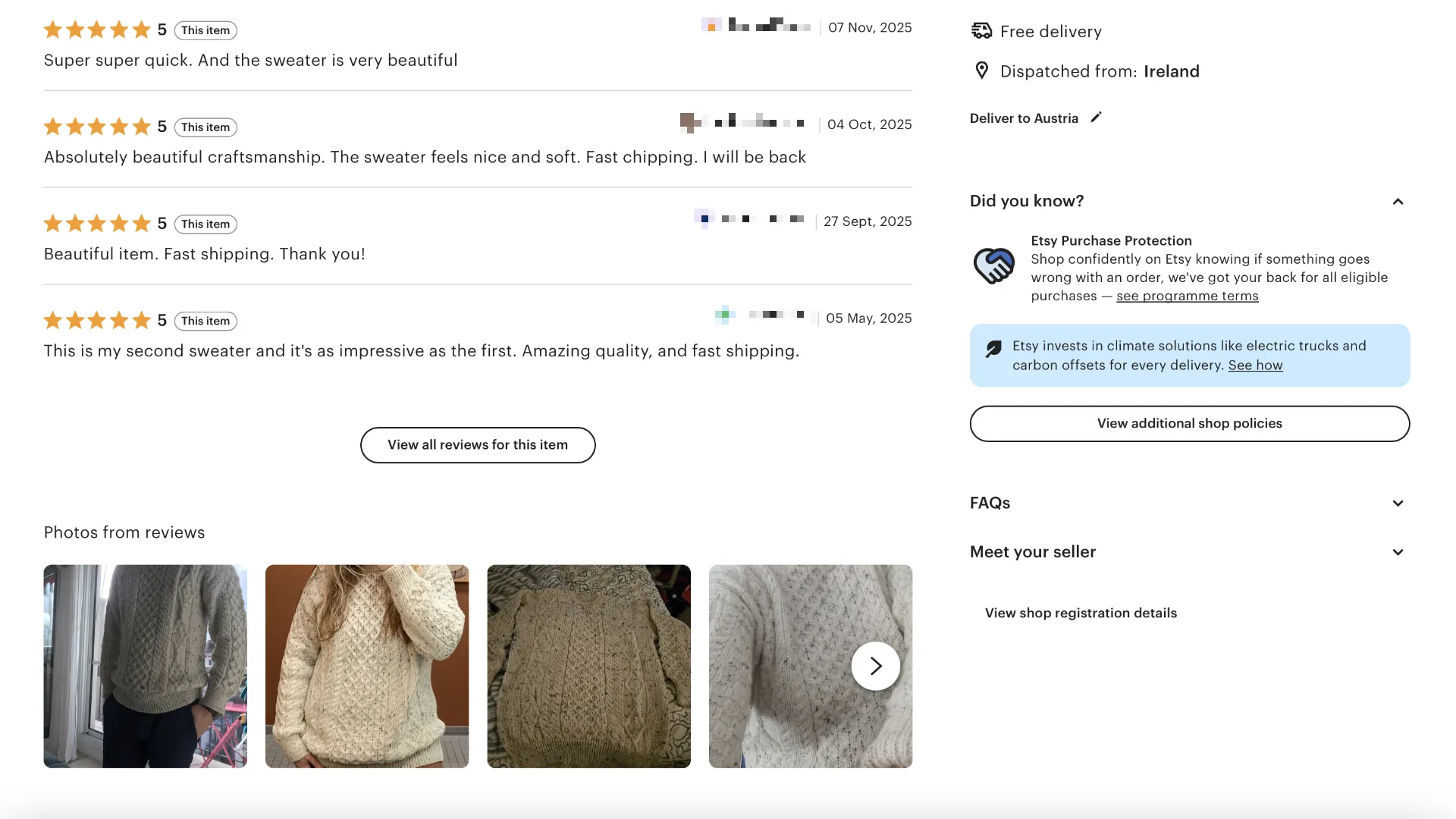
As a contrary example, take this sweater. It is clearly visible that it was shot on site, there are different views and perspectives showing the model wearing it, even detail shots (with no weird smudging, merging or artifacts), and the reviews also show images of customers wearing the final product (meaning it actually exists!).
Merry ChrAIstmas
Another fairly fitting example for the current season is Christmas ornaments. For some reason, they are currently being heavily advertised, at least to me and some other users, on YouTube. Sometimes with very... odd motives.
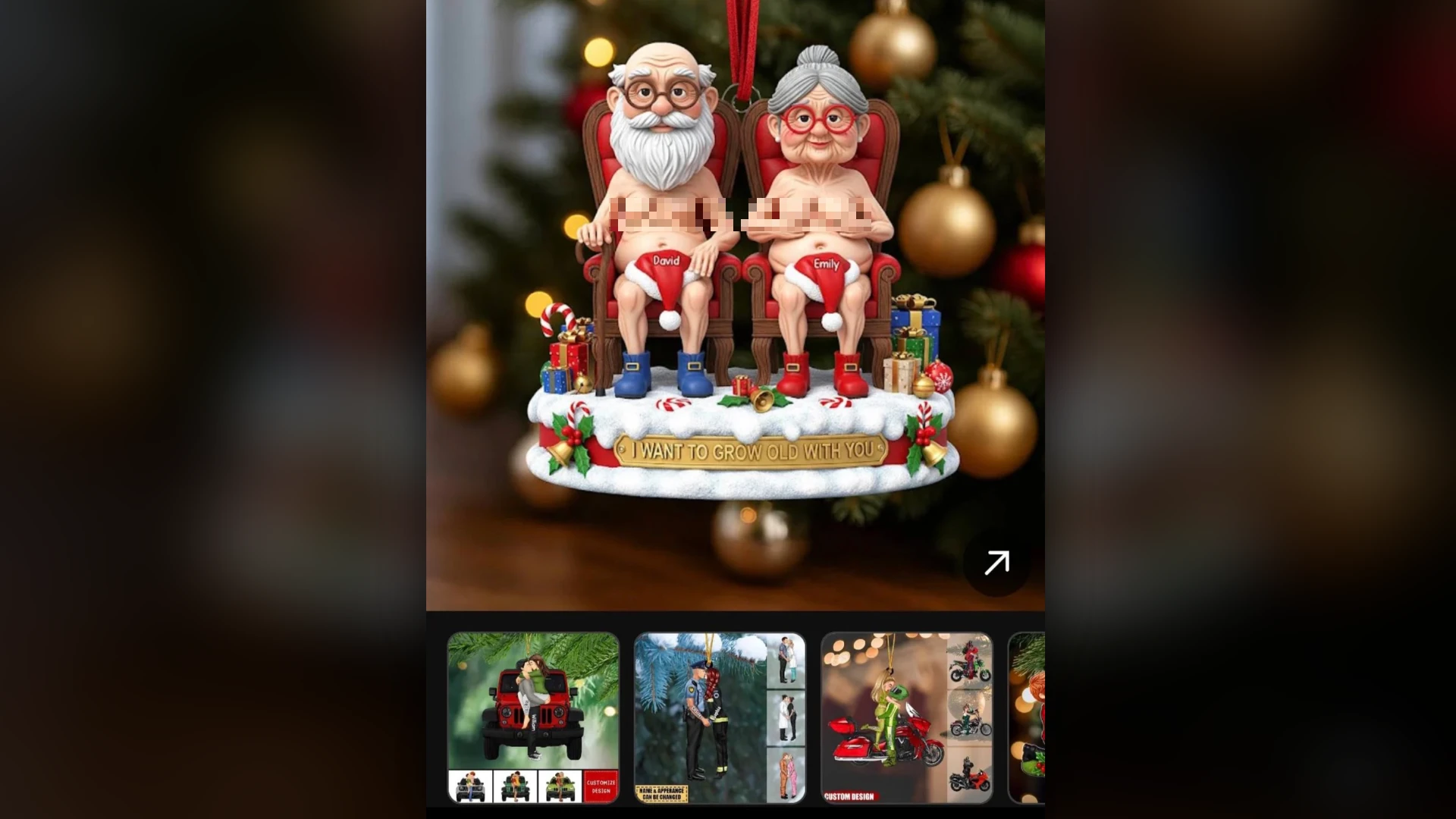
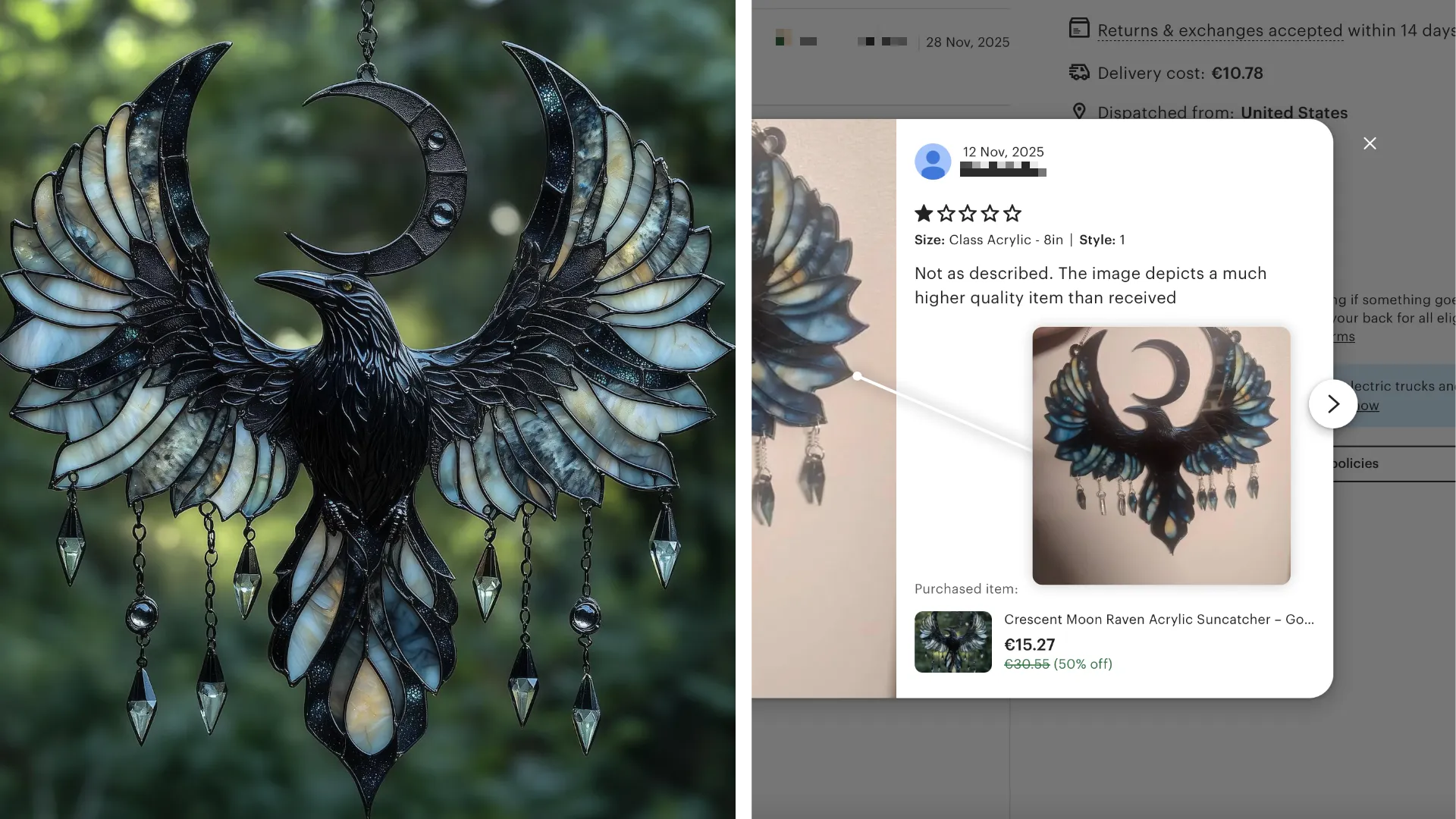
Most of these advertised ornaments are also deceiving, in my opinion. When looking at these examples, it's fairly clear that these images are AI-generated. Apart from the overall uncanny look, it’s again shown in the lack of different views (only ever showing one perspective or different designs - generations - from the same perspective) and their details. Patterns look smudged and inconsistent, and especially the text eventually turns into gibberish.
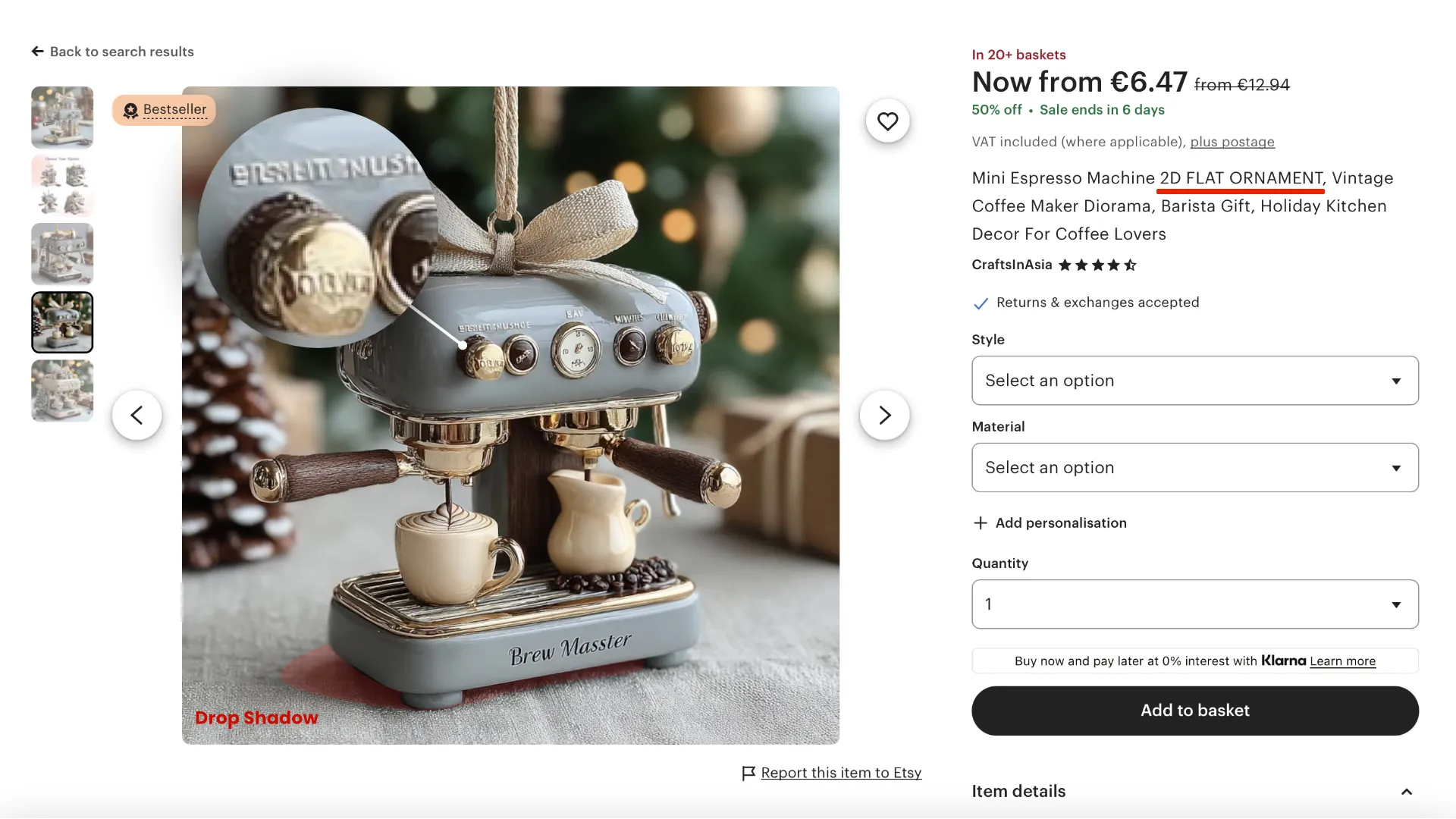
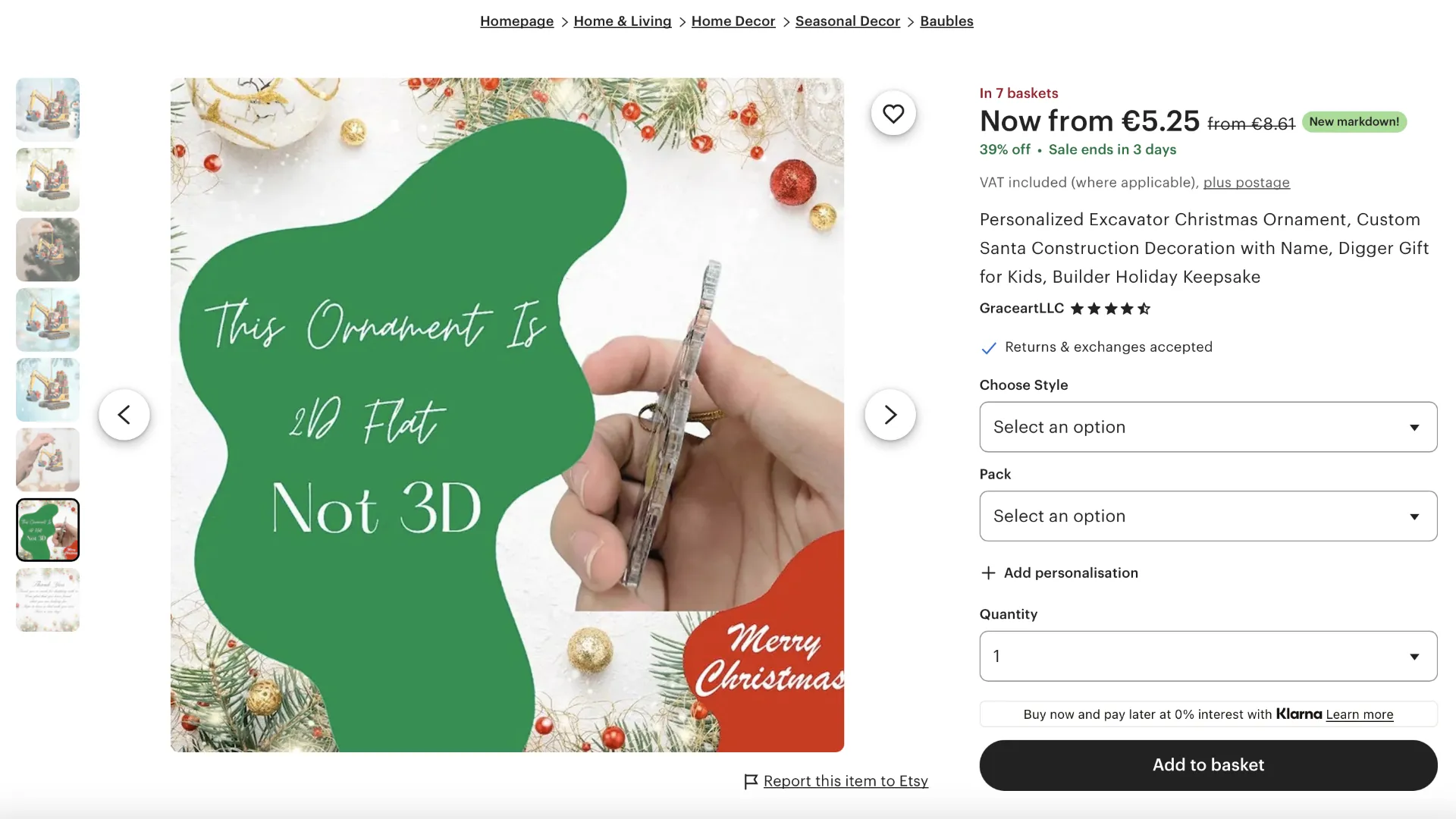
What’s deceiving about these is that most of these give the impression of being three-dimensional. When looking at the way the light interacts with these ornaments or the shadow cast on the ground, it creates the illusion that these are actual, three-dimensional ornaments (as shown in the image above). This is, in my opinion, a fairly deceptive practice, as in reality, the end product is the shown design printed on 2D acrylic glass.
To give some credit, most shops have at least started to note this in one of the images shown on the product's page or in the description, blaming the 3D look on the "art style."
Personalised PortrAIts
Ever since the release of image generation models, some companies have emerged offering customised portraits of pets or loved ones. Meaning, the actual product you receive, is AI generated. I wanted to include these services, as while they are certainly not misleading or deceptive, I do scratch my head sometimes when seeing them advertised.
First off, there's the USP of these services, as taken from one of these websites:
"We believe that art should be personal and emotional."
AI-generated imagery, presented as personal and emotional. What a time to be alive.
But apart from that, and this might be a hot take... what's the point? With these image generation models being easily accessible and free, I can quite literally do the same on my laptop within seconds. There is nothing special about the creation itself or art style, as these are not created by real artists. It also doesn't require any specific skills or knowledge to replicate the results, as everything is generated.

I actually just created a ChatGPT account to show this, using an image of the cutest little princess I used to have the pleasure of sharing my life with:
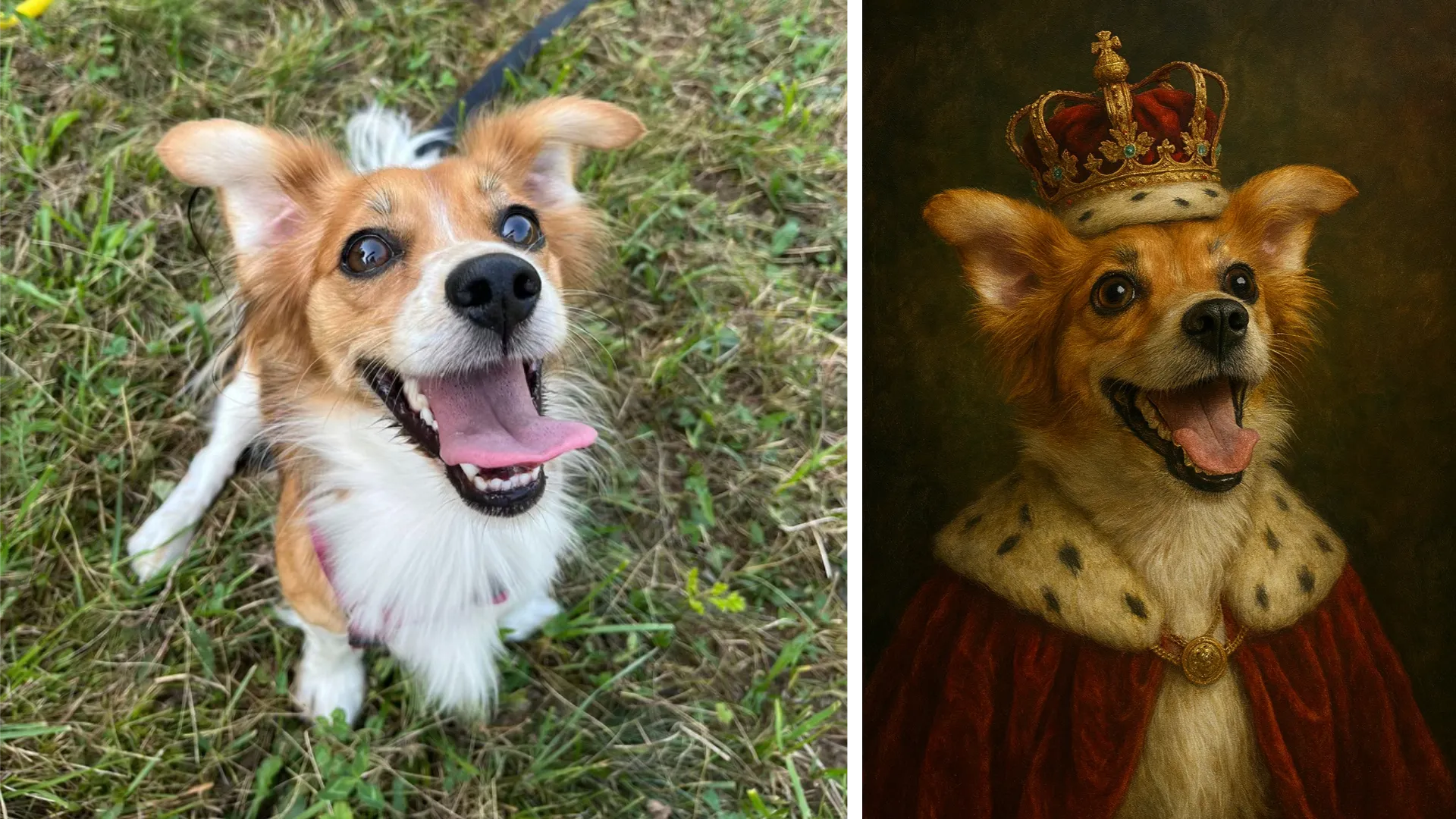
This was the first try, which took me a single prompt and a few seconds. If I wanted to print this at my local print shop, including a frame, it would cost me a third of the starting price of 30€ at one of these online shops.
Although the idea of personalised, funny caricatures of one's pet is wholesome, I can't help but wonder what the point is of offering such services when they operate mostly on AI. Since these companies use tools that anyone (with, no offense, no skills) can use for free, and since the overall product would be much cheaper if ""made by yourself"", these services end up feeling incredibly dull and replaceable. I also wonder how many customers actually know the images are AI-generated, given that it's nowhere disclosed on the website, or how many believe real artists are working on these illustrations. I feel like with such services, there's rarely any transparency about the use of AI.
Final Thoughts
I think it's clear from this blog post that I'm not a fan of AI-generated content. Everything is slowly losing its personality and individuality and becoming a soulless copy of each other. Just look at LinkedIn, for example. Most of the posts in my timeline are clearly AI generated, and it basically feels like different ChatGPT instances talking to each other. And what's even more dystopian about all of this is the fact that this generated content is now also used to train future AI models.
But especially in this presented use cases of product presentation, I see it as highly unethical and concerning (except these personalised image services, although some do state that the art is actually created by real artists, when clearly, it's not), as it makes it incredibly hard to tell what's actually a real product or what might be a surprise when the end product is received.
I hope these tips can help raise awareness, and apart from the signs mentioned, always check reviews. I don't purchase anything anymore without thoroughly checking reviews, with actual images or, even better, videos showing the end product (although this might get tricky too in the future).
Then there are platforms like TrustPilot or even Reddit, which sadly often reveal the true nature of these shops, with customers warning about these sites falsely advertising products or straight-up being scams. Just googling the company beforehand can sometimes save you a lot of time and spare you a great headache.