

RAM Prices Are Exploding
The increase in memory demand for AI infrastructure currently leads to RAM shortages and price increases.
This year, I wanted to finally build my first ever custom-built PC, with 64 sweet gigabytes of DDR5 RAM. And oh boy, I couldn't have picked a worse time.
RAM prices are currently skyrocketing through the roof. The 64GB DDR5 RAM I planned to buy originally sat at 234€ according to the price I noted in the spreadsheet I created for the build, roughly one year ago (as you're going to see, procrastinating turned out to be a mistake). As of writing this blog post, the same RAM currently sits at 905€ for the cheapest offer I could find online.
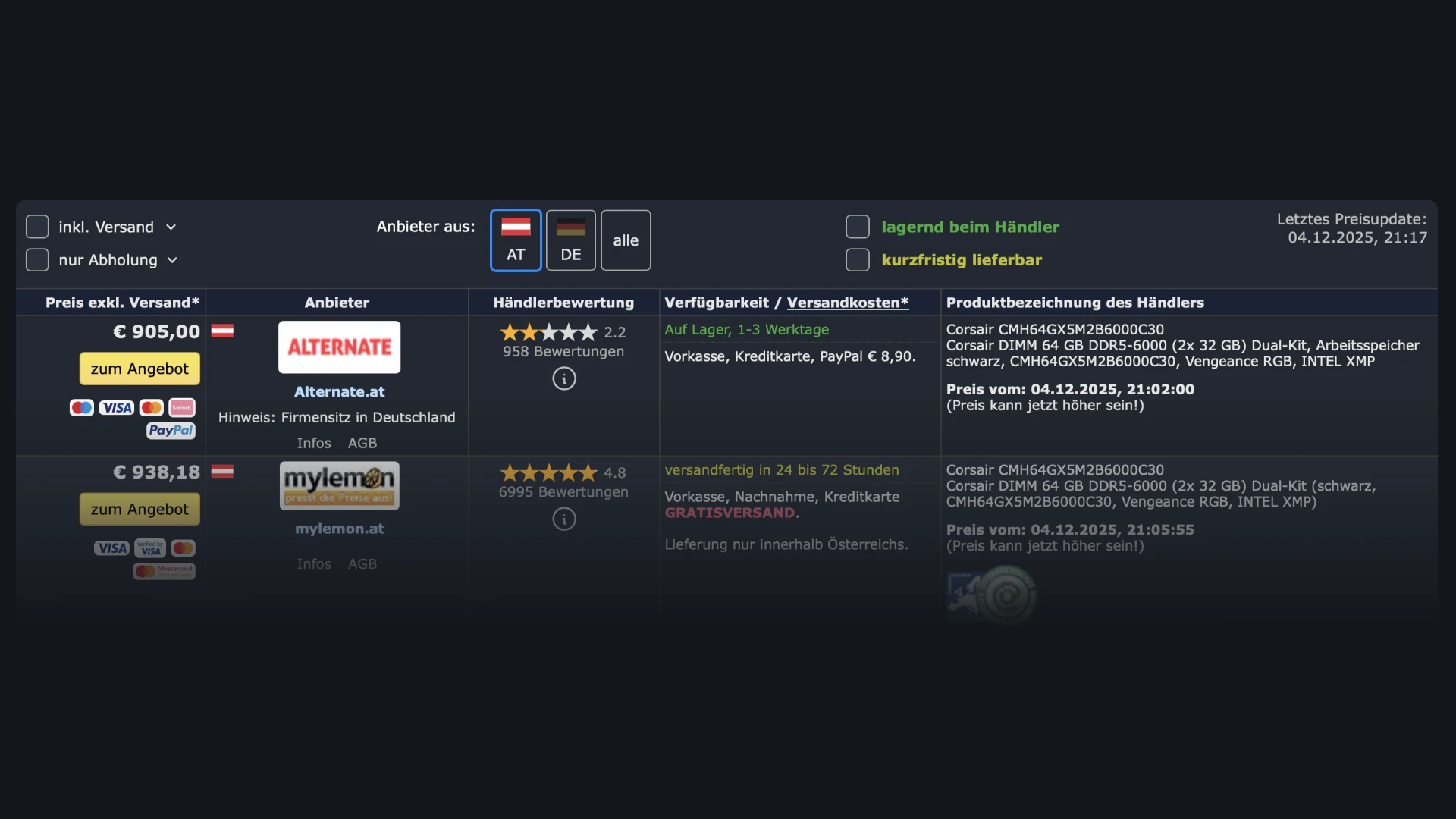
As is often the case in recent tech developments, and as reported in countless news articles, AI is primarily to blame. The increase in memory demand for AI infrastructure currently leads to shortages for consumer goods and price increases.
The RAM Price Crisis
The surge in AI datacenter construction (which is also driving up electricity and water consumption, by the way) has led to a shift in the DRAM market and demand. With companies shifting their priorities in favour of supplying AI datacenters, reallocating their production capacities to HBM (High Bandwidth Memory), there are massive price hikes in memory modules for consumer products, such as computers, laptops, smartphones and graphics cards.
As a disclaimer, I'm no expert on hardware, but as far as I understand, DRAM (like the DDR5 kits for PCs) and HBM (used in AI accelerators) use overlapping resources. As manufacturers pivot more and more capacity toward HBM for AI infrastructure, consumer DRAM ends up getting deprioritised, leading to shortages and higher prices.
According to different sources, the average price of consumer RAM increased by over 240%, based on a check of over 100 Amazon listings.
As a visualisation of how this can look like, below you can see a graph showing the past 120 days of price history for the 64GB DDR5 RAM I planned for my build, according to PC Part Picker:
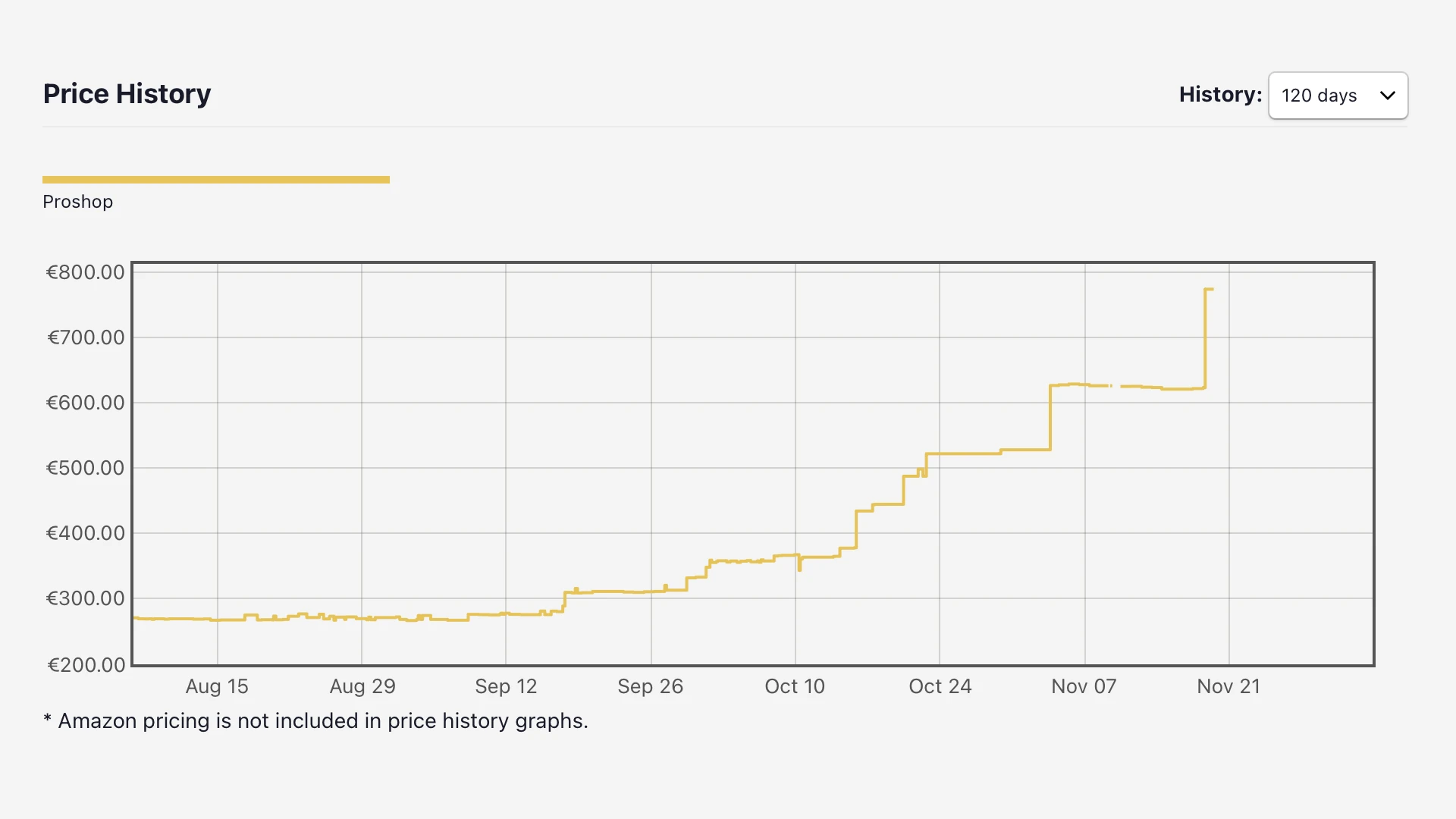
To put this in perspective, a PlayStation 5 is currently cheaper to buy than 64GB of DDR5 RAM.
Shifting Priorities with Consequences
When looking at current news, there's also a clear theme of corporations prioritising margins over mass.
Samsung Semiconductor Global for example, which manufactures memory modules and other chips, rejected an order for Samsung Electronics' Mobile Experience division, according to a report from SE Daily, prioritising data center suppliers to maximise profits. This basically means, Samsung's own smartphone manufacturing division won't receive needed DRAM chips from... Samsung, due to said reasons.
Then there's Micron's well-known consumer brand "Crucial", which is being discontinued, no longer releasing new SSD and memory modules from the end of February 2026 under its label. Instead, the company shifts its focus away from the low-margin consumer market to the more profitable AI sector and strategic customers.
And things look even bleaker when looking at the recent deal between OpenAI and two of the largest producers of memory chips, which is reported to make OpenAI consume up to 40% of the world's DRAM output.
I believe these examples also show fairly well how AI demand is reshaping the global tech market.
Final Thoughts
With further expected price increases in sight, I remain curious about how the market will develop, especially as someone who had planned to upgrade my hardware. Current Black Friday deals might be the last chance to buy RAM before further potential hikes.
I'm also curious about how this will affect video game consoles, as well as announced products such as the Steam Machine, whose pricing hasn't been revealed yet.